
Author: jasminsafari
-

Asiatic black bear
The Asiatic Black Bear (Ursus thibetanus), specifically the Baluchistan Black Bear subspecies (U. t. gedrosianus), is a highly significant but critically endangered mammal in Iran. As the westernmost edge of the species’ global range, the bears in Iran face unique conservation challenges. Habitat and Distribution in Iran Iran represents the western limit of the Asiatic…
-

Persian leopard
The Persian Leopard (Panthera pardus tulliana), also known as the Caucasian or Anatolian Leopard, is a magnificent and Endangered subspecies of leopard. Iran is universally recognized as the most crucial stronghold for this majestic big cat, hosting the largest remaining population in the world. Habitat & Distribution in Iran Primary Range: The Persian leopard is…
-

Caspian Seal
The Caspian Seal (Pusa caspica) is a unique and critically important marine mammal, as it is the only seal species and the only mammal endemic to the vast, landlocked Caspian Sea. This charismatic animal is a vital indicator of the sea’s ecological health, but its population has suffered a catastrophic decline, leading to its classification…
-
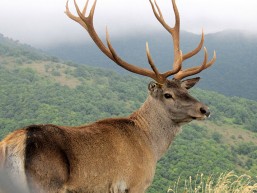
Maral red deer
The Caspian red deer (Cervus elaphus maral), is one of the easternmost subspecies of red deer that is native to areas between the Black Sea and Caspian Sea such as Crimea, Asia Minor, the Caucasus Mountains region bordering Europe and Asia, and along the Caspian Sea region in Iran. The Caspian red deer is sometimes referred…
-
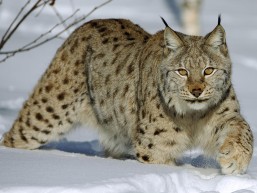
Eurasian lynx
The Eurasian lynx (Lynx lynx) is a medium-sized cat native to European and Siberian forests, Central Asia and East Asia. It is also known as the European lynx, common lynx, the northern lynx, and the Siberian or Russian lynx. While its conservation status has been classified as “Least Concern”, populations of Eurasian lynx have been reduced…
-

Asiatic cheetah
The Asiatic cheetah (Acinonyx jubatus venaticus), also known as the Iranian cheetah, is a critically endangered cheetah subspecies surviving today only in Iran. It used to occur in India as well, where it is locally extinct. The Asiatic cheetah lives mainly in Iran’s vast central desert in fragmented pieces of remaining suitable habitat. Although once common,…
-
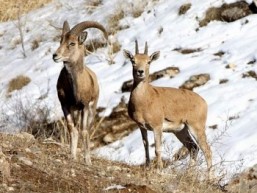
Khangormaz
Khangormaz (also spelled Khan Garmz or Khan-Gormaz) is a prominent protected area and mountain massif in the Hamedan Province of western Iran. It is widely considered one of the most important genetic and ecological reserves in the region. 1. Geography and Landscape Located approximately 34 km west of Tuyserkan and 25 km east of Asadabad,…
-

Siah kuh
Siah Kuh (Persian: سیاه کوه), meaning “Black Mountain,” refers to several locations in Iran, but the most prominent is the Siah Kuh National Park. Located on the border of Yazd and Isfahan provinces, it is celebrated as one of the most untouched and remote ecotourism destinations in Central Iran. Geography and Location Spanning approximately 80,786…
-
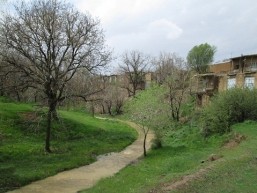
Lashgardar
The Lashgardar Protected Area, established in 1990, stands as one of the most ecologically significant regions in Western Iran. Spanning 16,089 hectares within the Hamedan Province, this sanctuary offers a unique transition between rugged mountainous terrain and expansive plains. Geography and Climate Lashgardar is defined by its dramatic elevation, ranging from 1,800 to 2,820 meters…
-
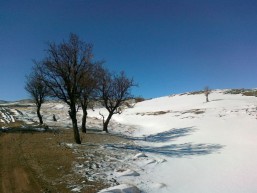
Bashgol
The Bashgol Protected Area is one of Iran’s most diverse ecological landscapes. Established in 1996, this 25,344-hectare sanctuary is a transition zone where rolling plains meet rugged highlands, offering a unique habitat for rare Persian wildlife and a serene escape for nature lovers. Location and Geography Situated in Qazvin Province, Bashgol is characterized by its…