Tang-e Sayad National Park: A Biodiversity Gem in Chahar Mahall and Bakhtiari
Tang-e Sayad (Persian: تنگ صیاد) is a premier ecological sanctuary located in the heart of the Chahar Mahall and Bakhtiari Province. Covering an expanse of 22,896 hectares, this protected area is a masterclass in high-altitude biodiversity and rugged natural beauty.
Established as a protected zone in 1973 and elevated to National Park status in 1995, Tang-e Sayad remains one of the most significant conservation sites in Iran.
Geography and Climate
Tang-e Sayad is characterized by its dramatic altitudinal range, stretching from 2,080 to 3,220 meters above sea level. This elevation, combined with an average annual precipitation of 450 mm and a mean temperature of 8°C, creates a unique temperate semi-arid climate.
Water Sources: The Kiar River serves as the park’s lifeblood, forming its southern boundary and providing the region’s only permanent water source.
Flora: A Botanical Treasure Trove
The region is biologically rich, hosting 250 plant species, including 30 endemic species found nowhere else. The landscape is dominated by Astragalus (Milk-vetch) and a variety of hardy, aromatic plants:
Mountain Trees: Mountain Almond and Almond.
Herbs & Wildflowers: Thyme, Chamomile, Milfoil, Fennel, and Giant Fennel.
Resilient Shrubs: Daphne, Wormwood, Prickly Thrift, and Caper.
Wildlife: The Hunter’s Canyon
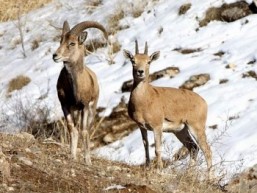
True to its name (Tang-e Sayad means “The Hunter’s Canyon”), the area is a vital habitat for 124 animal species. It is particularly famous for its populations of Persian Leopard, Wild Goat, and Wild Sheep.
Mammals: Wolf, Jackal, Indian Crested Porcupine, Persian Squirrel and Kuhl’s Pipistrelle.
Birds of Prey: Golden Eagle, Saker Falcon, Kestrel, and Eagle Owl.
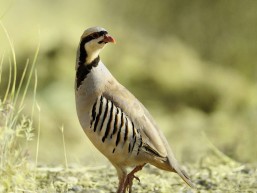
Ground Birds: Caspian Snowcock and Chukar Partridge.
Reptiles: Caspian Pond Turtle, Sand Boa, Montpellier Snake, and the Large-scaled Rock Agama.
Tourism and Research
Thanks to its high biodiversity, stunning vernal (spring) flowers, and well-maintained access roads, Tang-e Sayad is an ideal destination for:
Scientific Research: A living laboratory for botanists and zoologists.
Eco-Tourism: Perfect for wildlife photography and trekking through boulder-strewn landscapes.
Birdwatching: One of the best locations in Central Iran to spot rare raptors.

Khangormaz
Khangormaz (also spelled Khan Garmz or Khan-Gormaz) is a prominent protected area and mountain massif in the Hamedan Province of western Iran. It is widely

Siah kuh
Siah Kuh (Persian: سیاه کوه), meaning “Black Mountain,” refers to several locations in Iran, but the most prominent is the Siah Kuh National Park. Located
Lashgardar
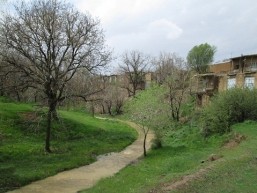
The Lashgardar Protected Area, established in 1990, stands as one of the most ecologically significant regions in Western Iran. Spanning 16,089 hectares within the Hamedan
Bashgol
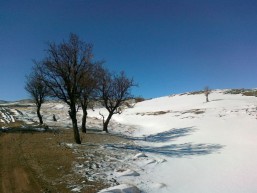
The Bashgol Protected Area is one of Iran’s most diverse ecological landscapes. Established in 1996, this 25,344-hectare sanctuary is a transition zone where rolling plains