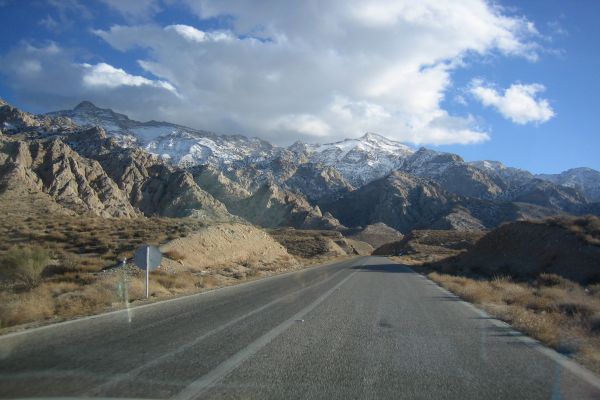
The Khabr and Rochun region stands as one of the most ecologically diverse protected zones in Iran. Established as a protected area in 1971 and designated a Wildlife Refuge in 1975, its central core was later promoted to National Park status, reflecting its immense biological value.
Location and Geography
Situated in the heart of Kerman Province, the Rochun region comprises five distinct sectors totaling 28,171 hectares, all bordering the majestic Khabr National Park. This vast wilderness features a dramatic altitude range from 1,040 to 2,640 meters, creating a unique intersection of arid and cold semi-arid climates.
Water Sources and Climate
The region’s survival is supported by a network of vital water sources, including:
Rivers: Cheshmeh Hossein, Baghkenar, and Goor-e Khosro.
Traditional Infrastructure: Ancient Qanats, wells, and natural springs.
Climate Profile: With mean temperatures between 15–21°C and annual precipitation ranging from 200–350 mm, the park supports both tropical plains and temperate mountainous sites.
Diverse Flora and Vegetation
The varied elevations allow for a rich botanical tapestry. Key plant species include:
Trees: Mountain almond, Turk terebinth pistache, Nubk tree, Willow, Olive, and Juniper.
Flowers & Herbs: True myrtle, Astragal, Persian globe thistle, Borage, and Colocynth.
Wildlife and Rare Species
Khabr and Rochun are legendary among naturalists for hosting a spectacular array of fauna. It remains a critical sanctuary for the endangered Asiatic Cheetah.
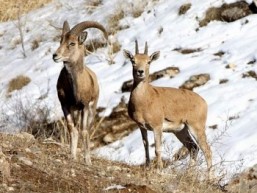
Mammals: Jebeer gazelle, wild sheep, wild goat, Persian leopard, caracal, wild cat, Pallas’s cat, and striped hyena.
Avifauna (Birds): Black partridge, Houbara bustard, white-throated robin, see-see partridge, bearded vulture, and Bonelli’s eagle.
Reptiles: Spur-thighed tortoise, leaf-nose viper, and diadem snake.
Historical Note: In recent history, the area was also home to the Asian black bear and the Persian wild ass.
Tourism and Research Opportunities
Beyond its biological importance, the region is a hub for ecotourism and scientific research. Visitors are drawn to:
Ancient Monuments: Historical sites nestled within the wilderness.
Scenic Landscapes: Frequent springs and diverse vegetation cover.
Accessibility: Proper access roads make it one of the more reachable high-protection zones in southern Iran.

Khangormaz
Khangormaz (also spelled Khan Garmz or Khan-Gormaz) is a prominent protected area and mountain massif in the Hamedan Province of western Iran. It is widely

Siah kuh
Siah Kuh (Persian: سیاه کوه), meaning “Black Mountain,” refers to several locations in Iran, but the most prominent is the Siah Kuh National Park. Located
Lashgardar
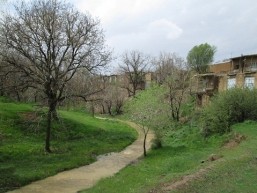
The Lashgardar Protected Area, established in 1990, stands as one of the most ecologically significant regions in Western Iran. Spanning 16,089 hectares within the Hamedan
Bashgol
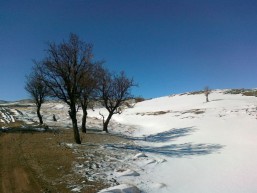
The Bashgol Protected Area is one of Iran’s most diverse ecological landscapes. Established in 1996, this 25,344-hectare sanctuary is a transition zone where rolling plains