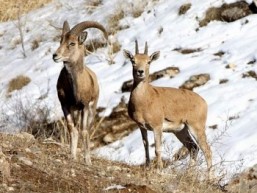
The Haftad Gholleh Protected Area, established in 1973, is one of Iran’s oldest and most prestigious wildlife sanctuaries. Covering 97,437 hectares in the Markazi Province, this region is a masterclass in ecological diversity, serving as a premier destination for ecotourism, wildlife photography, and environmental research.
Geography and Climate
Located adjacent to the Mighan Kavir and near the Arak-Qom highway, Haftad Gholleh features a dramatic landscape of rolling hills, expansive plains, and rugged mountains.
Altitude: Ranges from 1,580m to a towering 2,960m.
Climate: A mix of temperate arid and cold semi-arid climates.
Extreme Weather: Temperatures fluctuate from winter lows of -25°C to summer highs of 40°C, with an annual precipitation of 340mm.
Flora and Vegetation
The topographic complexity of the region supports a vibrant carpet of botanical life. Key species include:
Medicinal & Aromatic: Mint, Borage, Milfoil, and Wormseed.
Wildflowers: Fritillary, Tulip Papaver, Carnation, and Bleeding Heart.
Desert Hardy: Astragal, Succory, Cousinia, and Summer Cypress.
Wildlife and Rare Species
Historically one of Iran’s most significant game parks, Haftad Gholleh is a sanctuary for a vast array of mammals, birds, and reptiles.
Mammals: Wild Goat, Wild Sheep (Mouflon), Goitred Gazelle, Wild Boar, Wolf, Wild Cat, Leopard, Badger, and unique bat species like Kuhl’s Pipistrelle and Geoffroy’s Bat.
Avifauna (Birds): A haven for raptors and songbirds, including the Golden Eagle, Kestrel, Buzzard, Hobby, Chukar Partridge, and the Black-bellied Sandgrouse.
Reptiles: Notable for its venomous and rare snakes, such as the Saw-scaled Viper, Persian Horned Viper, and Levantine Viper, alongside the Monitor Lizard and Spur-thighed Tortoise.
Visitor Information & Accessibility
Thanks to its proximity to the Arak-Qom main road, Haftad Gholleh is highly accessible for those traveling from Tehran or Central Iran. Its combination of natural beauty, historical prestige as a hunting lodge for Qajar kings, and rich biodiversity makes it a top-tier site for nature-based tourism and ecological research.

Khangormaz
Khangormaz (also spelled Khan Garmz or Khan-Gormaz) is a prominent protected area and mountain massif in the Hamedan Province of western Iran. It is widely

Siah kuh
Siah Kuh (Persian: سیاه کوه), meaning “Black Mountain,” refers to several locations in Iran, but the most prominent is the Siah Kuh National Park. Located
Lashgardar
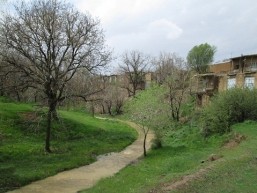
The Lashgardar Protected Area, established in 1990, stands as one of the most ecologically significant regions in Western Iran. Spanning 16,089 hectares within the Hamedan
Bashgol
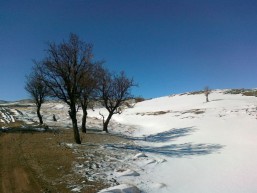
The Bashgol Protected Area is one of Iran’s most diverse ecological landscapes. Established in 1996, this 25,344-hectare sanctuary is a transition zone where rolling plains