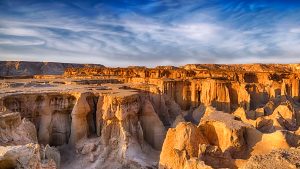
Dasht-e Kavir
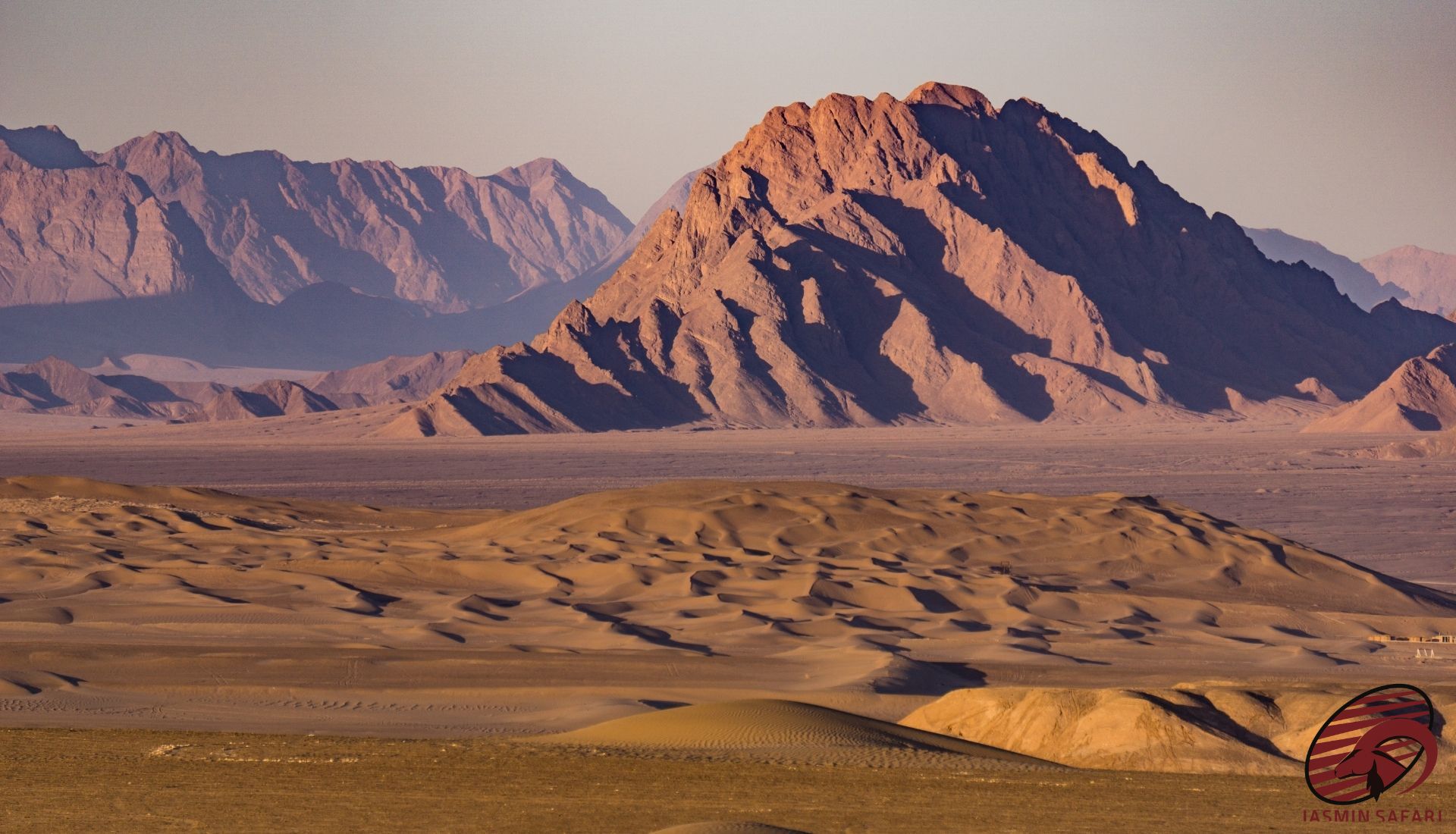
The Dasht-e Kavir, also known as the Great Salt Desert or Kavir-e Namak, is the largest desert in Iran and one of the most prominent natural features of the Iranian Plateau. It is characterized by its harsh environment, vast salt marshes, and unique geological formations.
Geography and Topography
Location: Situated in the middle of the Iranian Plateau, stretching from the foothills of the Alborz Mountains in the northwest towards the Dasht-e Lut in the southeast.
Size: Approximately 77,600 km² (30,000 sq mi), making it the 24th largest desert in the world.
Provinces: The desert spans across parts of multiple Iranian provinces, including Semnan, Isfahan, Yazd, Tehran, and Khorasan.
Key Features:
Kavir Buzurg (Great Kavir): A massive central salt marsh (playa) that is highly treacherous due to its soft, greasy mud beneath a thin salt crust (locally called “Charbeh”).
Daryahcheh-e Namak (Salt Lake): A large salt marsh in the western part, known for its mosaic-like salt plates.
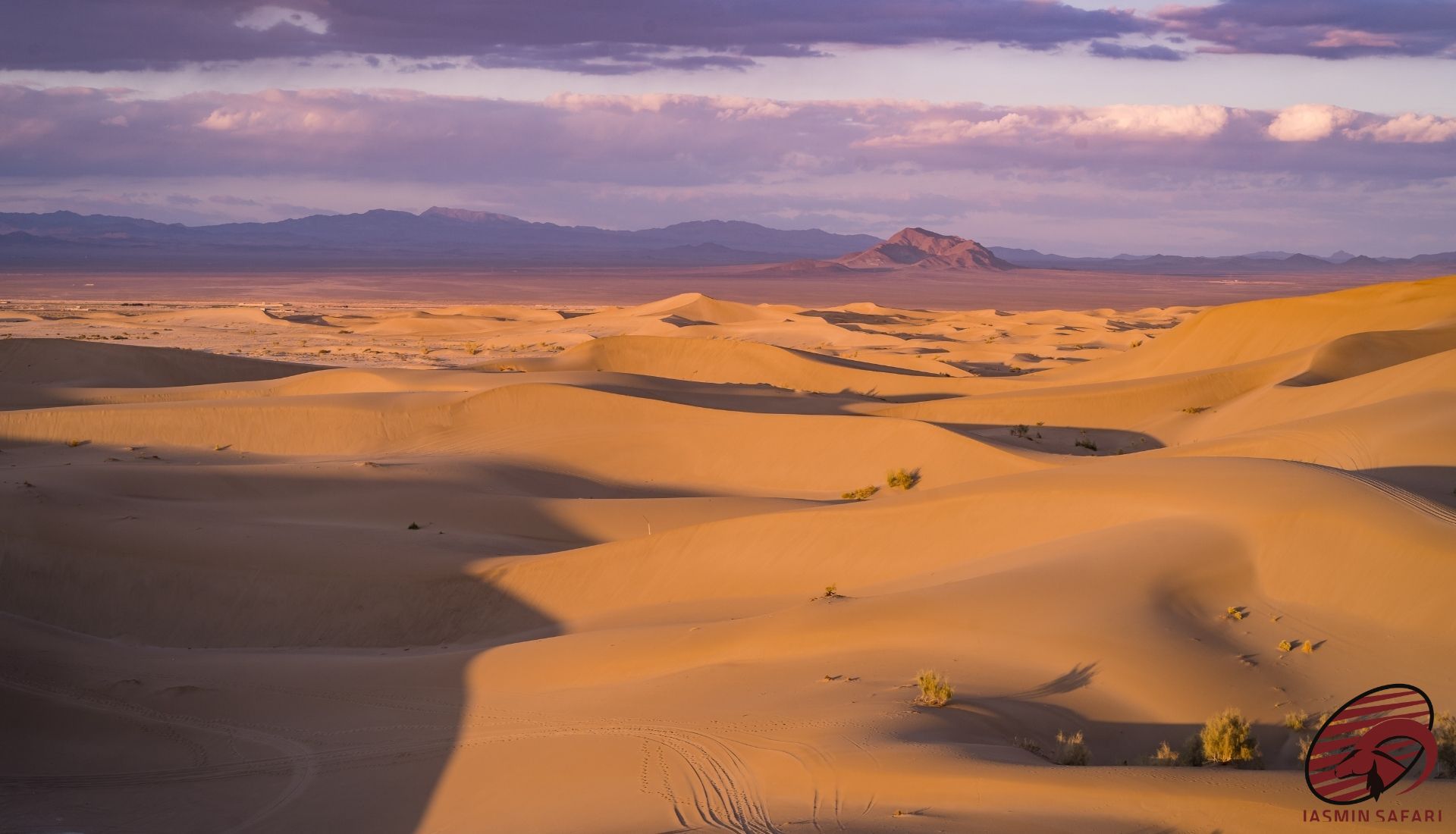
Rig-e Jenn: A vast area of imposing sand dunes, one of the most remote and difficult-to-cross regions in the desert, historically believed to be haunted.
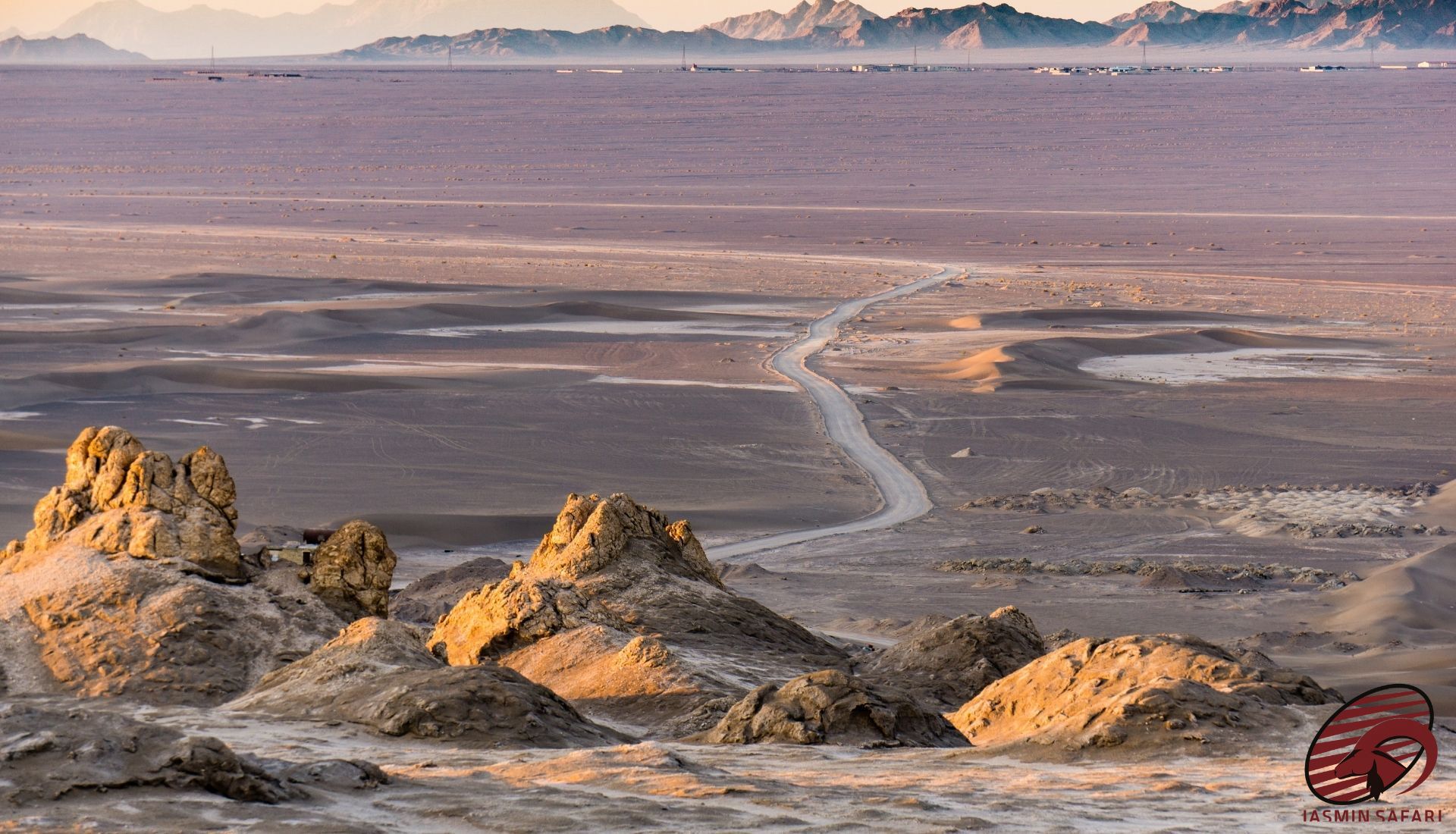
Salt Domes: The desert is home to some of the world’s best examples of salt domes, formed by subterranean salt layers pushing up through overlying sediment.
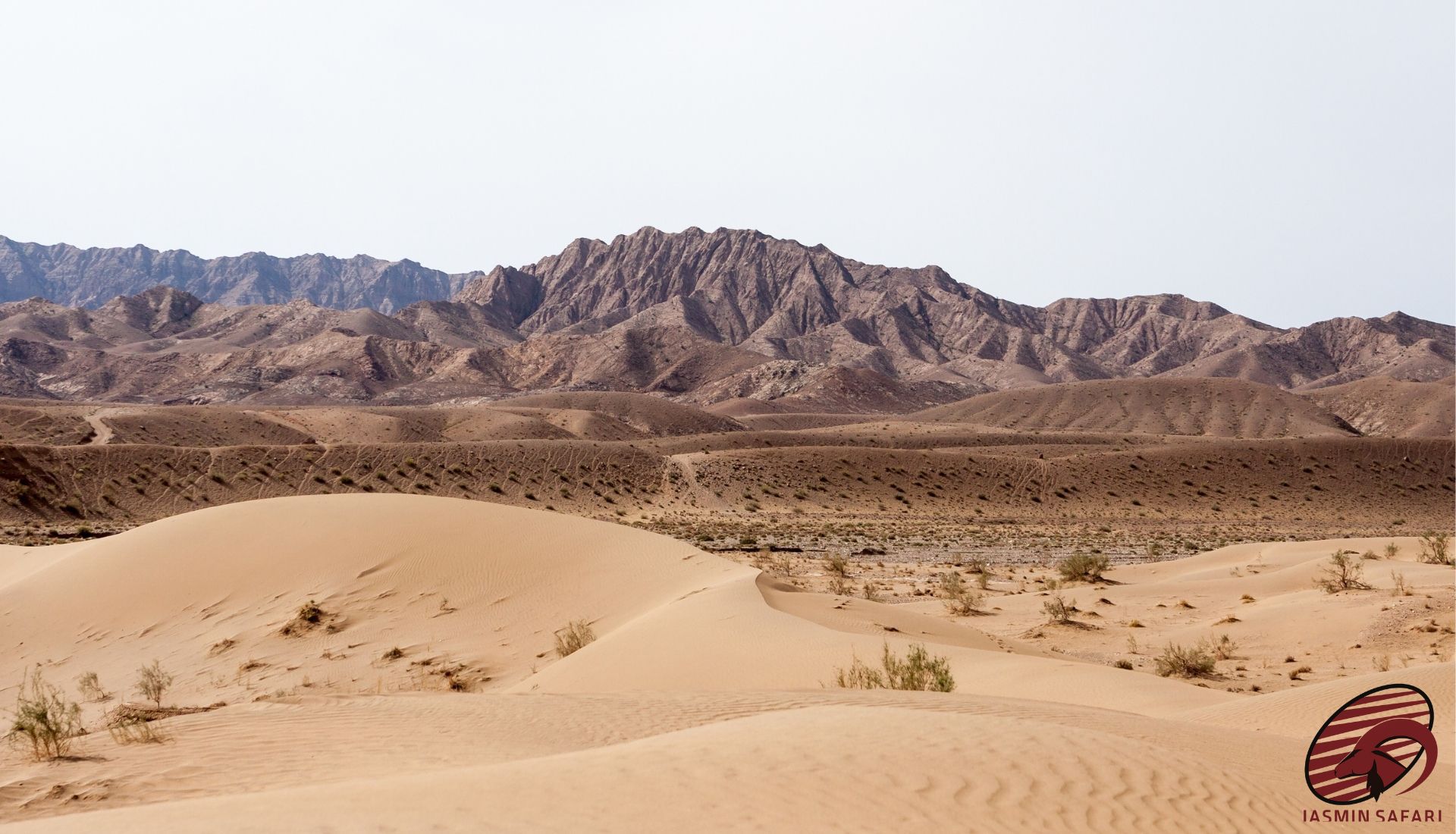
Landscape: Primarily composed of salt flats (playas), salt marshes (kavirs), dry riverbeds, clay pans, and areas of sand dunes and rocky outcrops.
Climate and Geology
Climate: Hyper-arid and continental desert climate.
Temperature Extremes: Experiences scorching summers, with temperatures frequently exceeding 50∘C (122∘F). The diurnal (day-night) temperature difference can be extreme, sometimes reaching 70∘C (158∘F), with winter nights dropping below freezing.
Precipitation: Very low annual rainfall. However, seasonal runoff from the surrounding mountains creates temporary lakes and marshlands.
Formation: Geologically, the area was once covered by a vast, salt-rich ocean. As the ocean dried up millions of years ago, thick salt layers were left behind and subsequently covered by mud. The low density of the salt caused it to push upwards, forming the distinctive salt domes.
Wildlife and Vegetation
Adaptation: Life is sparse, but highly adapted to the high salinity and extreme aridity.
Vegetation (Halophytes): Consists mainly of salt-tolerant plants (Halophytes), such as Tamarisk trees and scrub, often found around the margins of salt pans and seasonal water sources.
Fauna: The desert and its surrounding mountainous areas are a critical habitat for several rare and endangered species:
Asiatic Cheetah (Iranian Cheetah): One of the last remaining populations of this critically endangered animal.
Persian Onager (Wild Ass): Found in protected areas like the Kavir National Park.
Other Mammals: Persian leopard, Caracal (wild cat), Sand Cat, Wild Sheep, Goitered Gazelle, and various species of foxes and wolves.
Birds and Reptiles: Various desert birds (e.g., Houbara Bustard) and numerous species of lizards and snakes.
Human Settlements and Tourism
Settlements: The central areas are largely uninhabited due to the hostile environment and treacherous mud flats. Settlements are confined to scattered oases (e.g., Mesr, Farahzad, Abyaneh) and the surrounding mountain foothills.
Historical Significance: Ancient Silk Road routes passed along the desert’s edges, supported by historic caravanserais (roadside inns).
Tourism: The desert attracts adventure tourists and ecotourists for:
Desert Trekking and Safaris
Stargazing (due to minimal light pollution)
Camel Riding
Visiting Kavir National Park (UNESCO Biosphere Reserve)
Exploring the unique salt formations and historical mud-brick towns.

Qeshm Island
Qeshm Island, the largest island in the Persian Gulf and a jewel of Hormozgan province, is a unique destination in Southern Iran. Declared a UNESCO
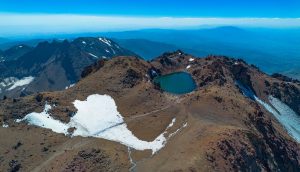
Mount Sabalan
Mount Sabalan (Savalan): Iran’s Sacred Volcanic Summit Mount Sabalan, known locally as Savalan, is one of the most magnificent and important natural and spiritual landmarks
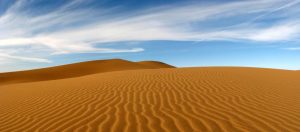
Maranjab Desert
Maranjab Desert The Maranjab Desert is one of Iran’s most accessible and picturesque desert landscapes, offering a perfect blend of towering golden sand dunes, historical
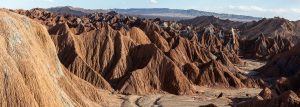
Lut Desert
Dasht-e Lut (Lut Desert) The Dasht-e Lut, meaning “Emptiness Plain” in Persian, is a large salt desert located in the southeastern part of Iran. It