Badab-e Surt
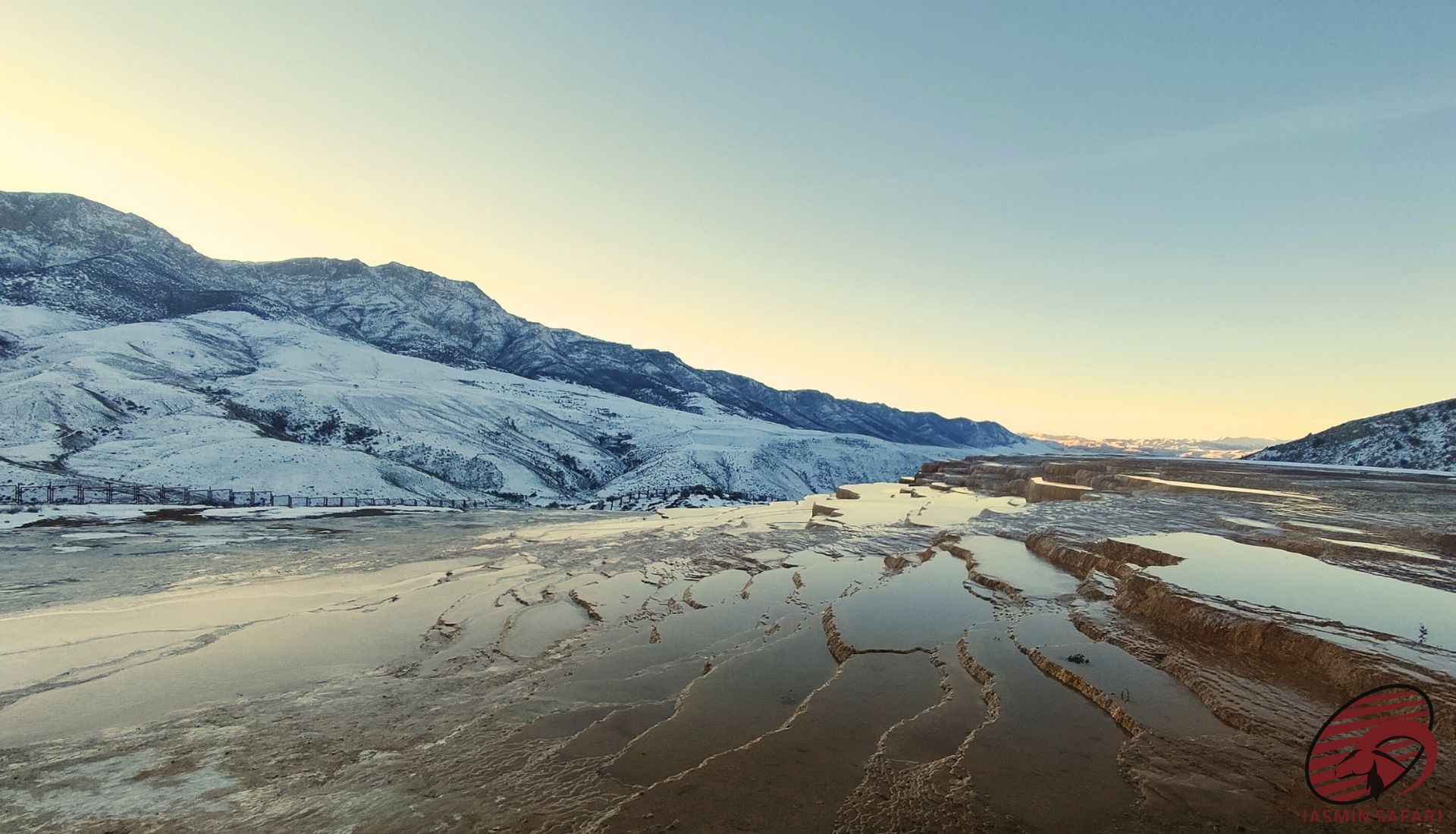
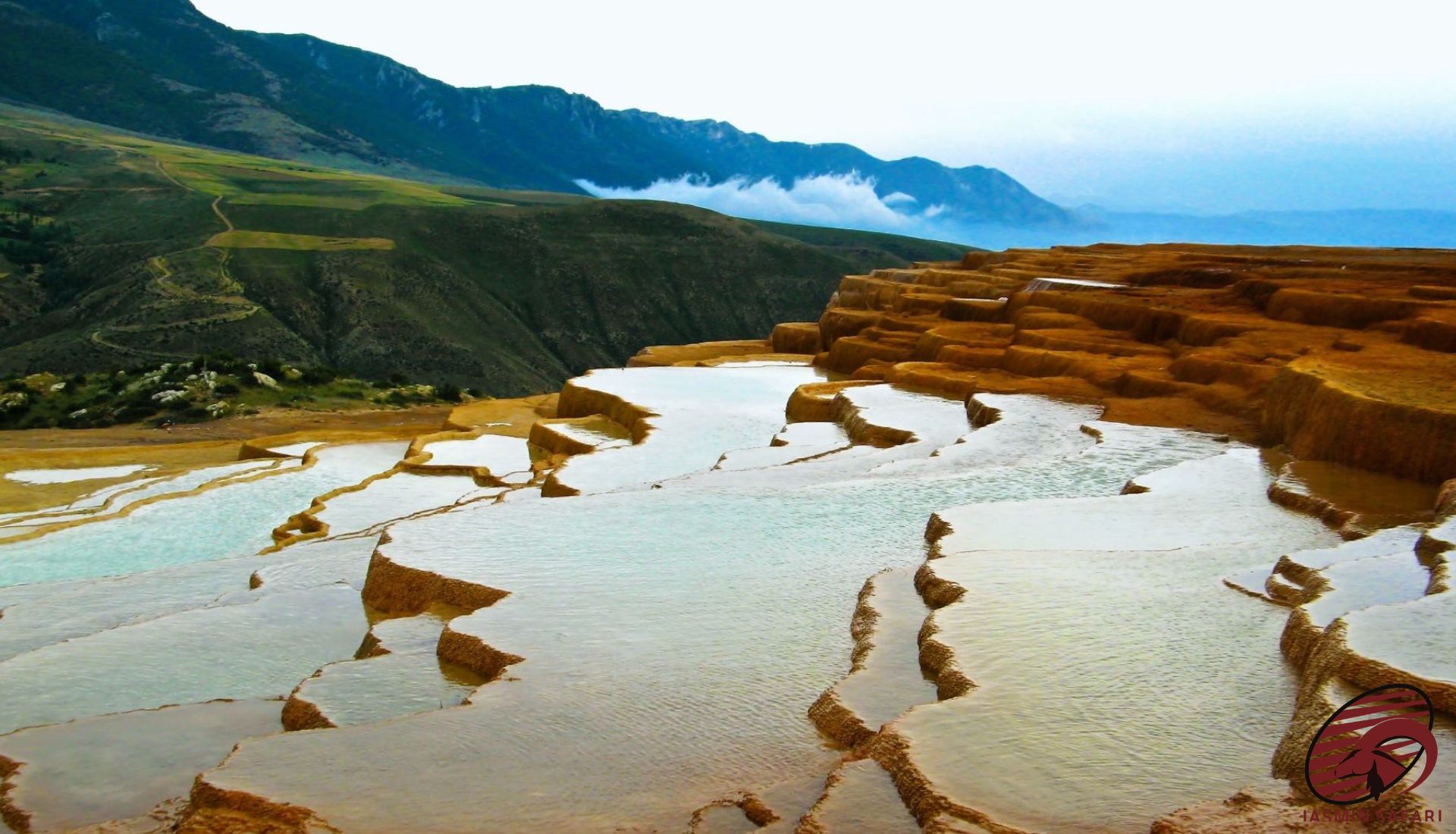
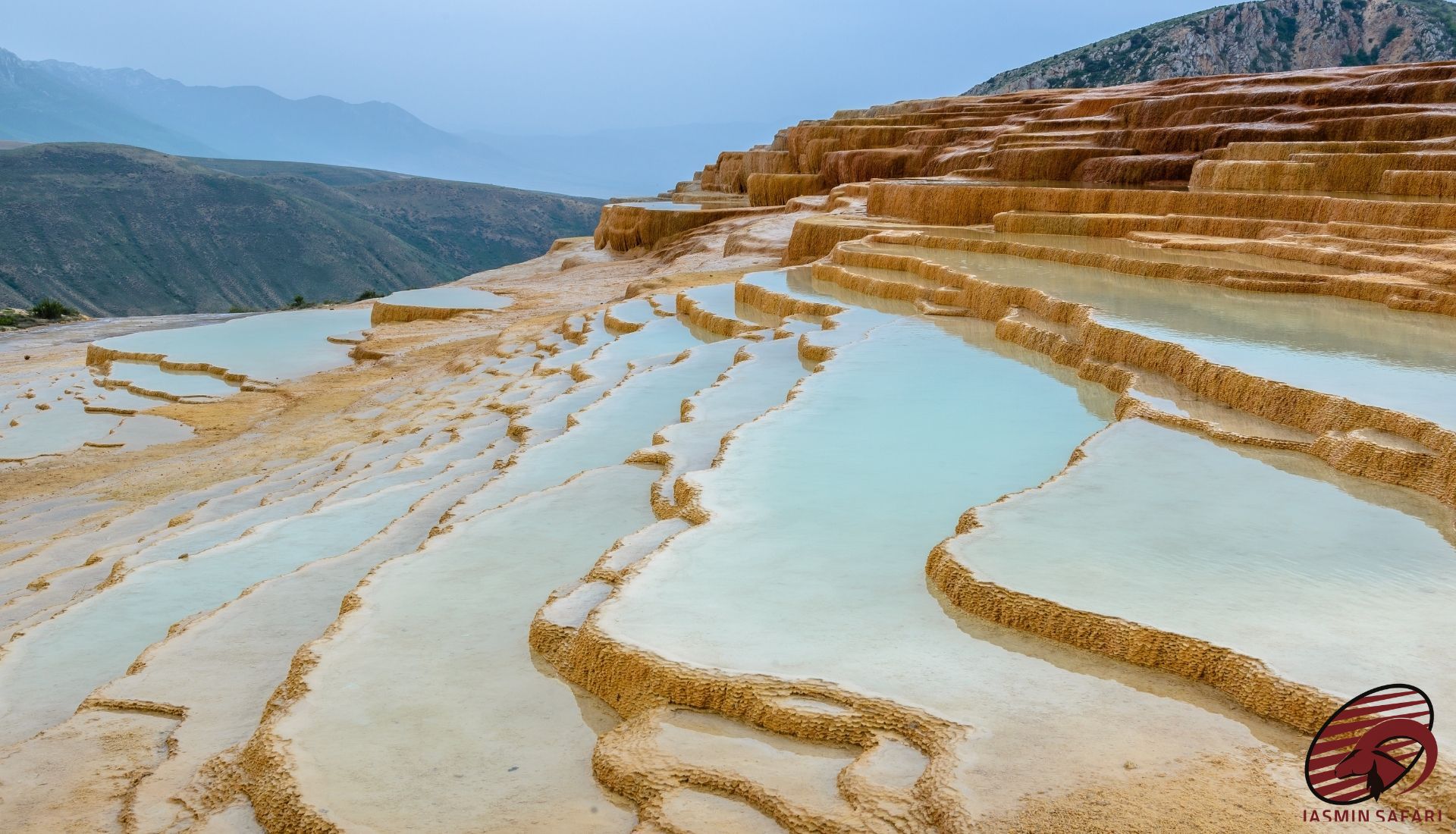
Badab-e Surt is a spectacular and rare natural wonder in Mazandaran Province, northern Iran, famous for its unique stepped terraces.
Geology
- Location: Located in Mazandaran Province, approximately 95 km southeast of the city of Sari and about 7 km east of the village of Orost.
- Formation: It is a range of stepped, multi-colored travertine terraces that have formed over thousands of years.
- How it Formed: As flowing water from mineral hot springs emerged from the mountainside and cooled, it deposited dissolved carbonate minerals (travertine). The process of deposition continues to this day.
- Name Meaning: The name is a compound of Persian words: Bad (gas) + Ab (water), meaning “gassed water” (referring to the carbonated mineral water), and Surt, the old name of the nearby village, meaning “intensity”.
The Two Distinct Springs
- Salty Spring (Upper Pool): Contains very salty water that collects in a small natural pool. Due to its salinity and high mineral content, it is believed to have medicinal properties for ailments like rheumatism, skin diseases, and migraine headaches. The water does not freeze, even in winter.
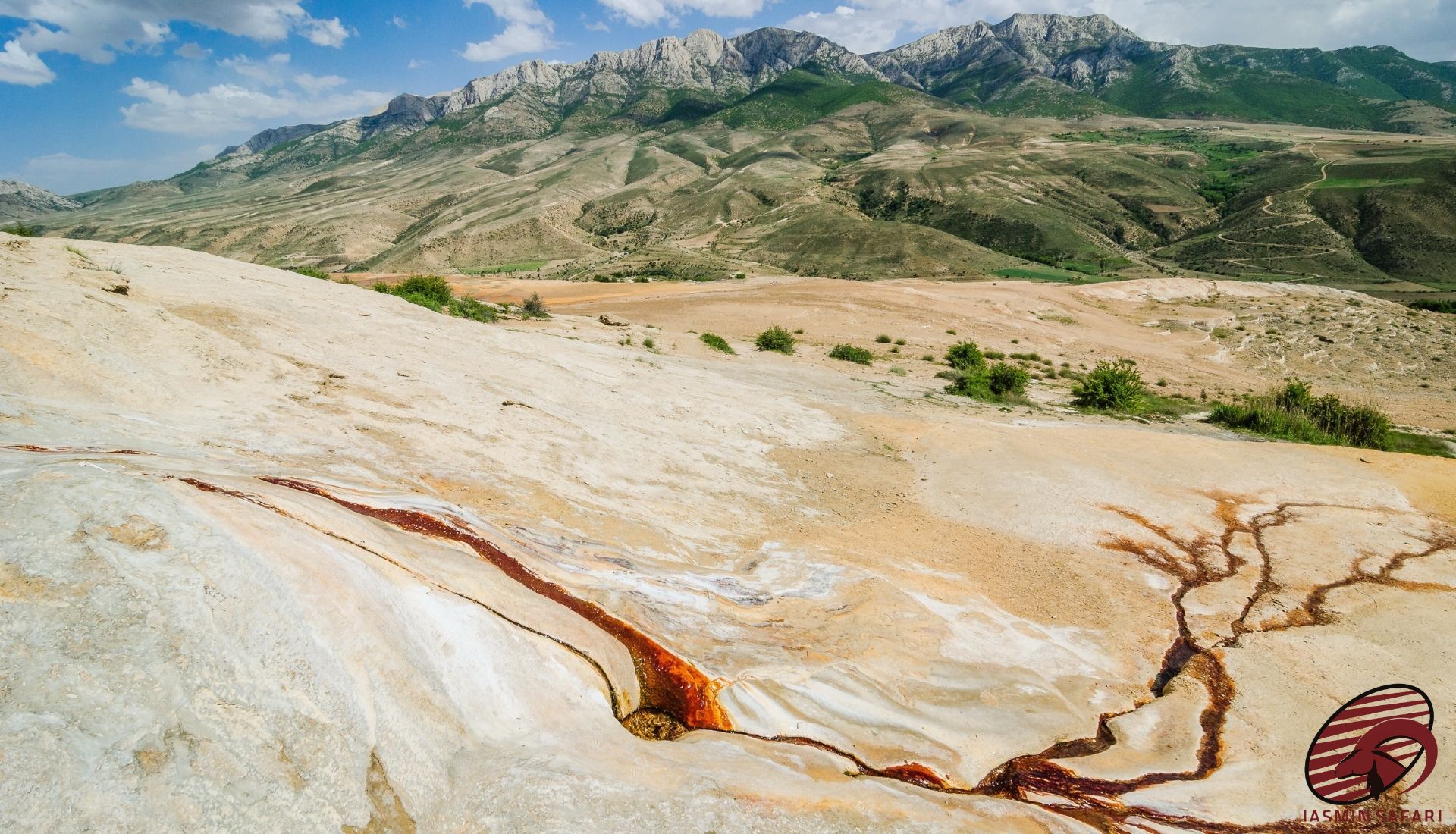
- Sour Spring (Orange Color): Located upstream from the first.Has a sour taste.Is predominantly orange, red, and yellow in color due to a high concentration of iron oxide sediments.
The combination of the flowing, mineral-rich water from these two springs has created the striking, colorful, and naturally formed staircase of terraced pools.
Visiting Badab-e Surt
Best Time to Visit: Spring (especially April and May) is considered the ideal time, as the weather is pleasant and the surrounding nature is lush.
- Photography: The springs are particularly breathtaking during sunrise or sunset, when the light reflects on the colorful pools, enhancing the red, orange, and yellow hues.
- Accessibility:
- It takes approximately 4–8 hours by car from Tehran, depending on the route (via Semnan or Sari).
- The road to Orost village is generally paved, but the final 3–7 km to the springs is a rough or unpaved road.
- From the base of the mountain, there is an ascent or hike (about 15-30 minutes) to reach the main terraces. Local transportation (like trucks) is sometimes available for hire from the village.
- Accommodation: You can find local house rentals or basic lodging in the nearby Orost village.
Conservation: Visitors are encouraged to be extremely careful not to damage the fragile travertine terraces by walking on them, as the site is vulnerable to erosion.

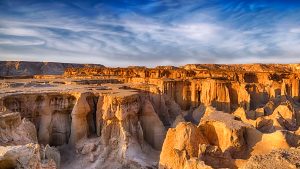
Qeshm Island
Qeshm Island, the largest island in the Persian Gulf and a jewel of Hormozgan province, is a unique destination in Southern Iran. Declared a UNESCO
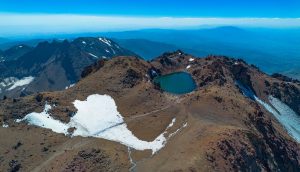
Mount Sabalan
Mount Sabalan (Savalan): Iran’s Sacred Volcanic Summit Mount Sabalan, known locally as Savalan, is one of the most magnificent and important natural and spiritual landmarks
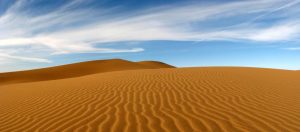
Maranjab Desert
Maranjab Desert The Maranjab Desert is one of Iran’s most accessible and picturesque desert landscapes, offering a perfect blend of towering golden sand dunes, historical
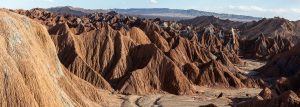
Lut Desert
Dasht-e Lut (Lut Desert) The Dasht-e Lut, meaning “Emptiness Plain” in Persian, is a large salt desert located in the southeastern part of Iran. It